Optimizing Solar + BESS Payback for an Office Building
A Soul Implementation Case Study: Leveraging AI to Slash Payback Periods and Maximize Renewable Asset Value in Tokyo
Project Snapshot
Introduction
This case study examines a large-scale office building in Tokyo that integrated a Solar + Battery Energy Storage System (BESS) to reduce energy costs. Despite the significant capital investment, the system initially faced a staggering payback period of 19.5 years. By deploying Soul's EnergyMix tool, the facility optimized its demand against tariffs and solar availability, dramatically reducing the payback period and enhancing system performance.
Operational Context
Based in Tokyo, this prominent office building spans 500,000 square feet and operates with a substantial maximum power demand of 1200 kW. To align with sustainability goals and manage operational costs, the facility management invested in a hybrid renewable energy system comprising a 125 kW rooftop solar array and a 961 kWh battery storage unit.
The primary objective was to reduce reliance on the grid during peak hours and lower overall energy expenditure. However, the complexity of Tokyo's tariff structures combined with the building's dynamic load profile presented unforeseen challenges.
The Optimization Challenge
While the Solar+BESS system was theoretically capable of delivering significant savings, the financial reality was disappointing. Calculations revealed a payback period of 19.5 years—far exceeding the acceptable ROI horizon for commercial real estate investments.
3.1 The Missing Link
The root cause was identified as a lack of intelligent optimization. The system's operation was not synchronized effectively with:
- Tariff Structures: Failing to fully capitalize on price differentials between peak and off-peak periods.
- Demand Peaks: Inefficient discharge timing that missed critical opportunities for peak shaving.
- Solar Availability: Suboptimal storage logic that occasionally wasted excess generation or failed to account for weather-related fluctuations.
The Soul Solution
To unlock the true potential of the renewable assets, Soul was deployed to transform the system from a passive energy source into an intelligent, grid-interactive asset.
Core Capabilities Deployed:
- IoT-Driven Mapping: Real-time mapping of critical energy parameters across the facility.
- ML-Based Predictive Intelligence: Identifying real-time usage patterns and accurately predicting future energy demand.
- Proactive Battery Health: Managing charge/discharge cycles to prevent deep discharge or overcharging, extending asset lifespan.
Implementation & Results
Soul's EnergyMix tool utilized proprietary AI scheduling to make the building truly grid-interactive. The implementation was non-intrusive, focusing on intelligent software control over existing hardware.
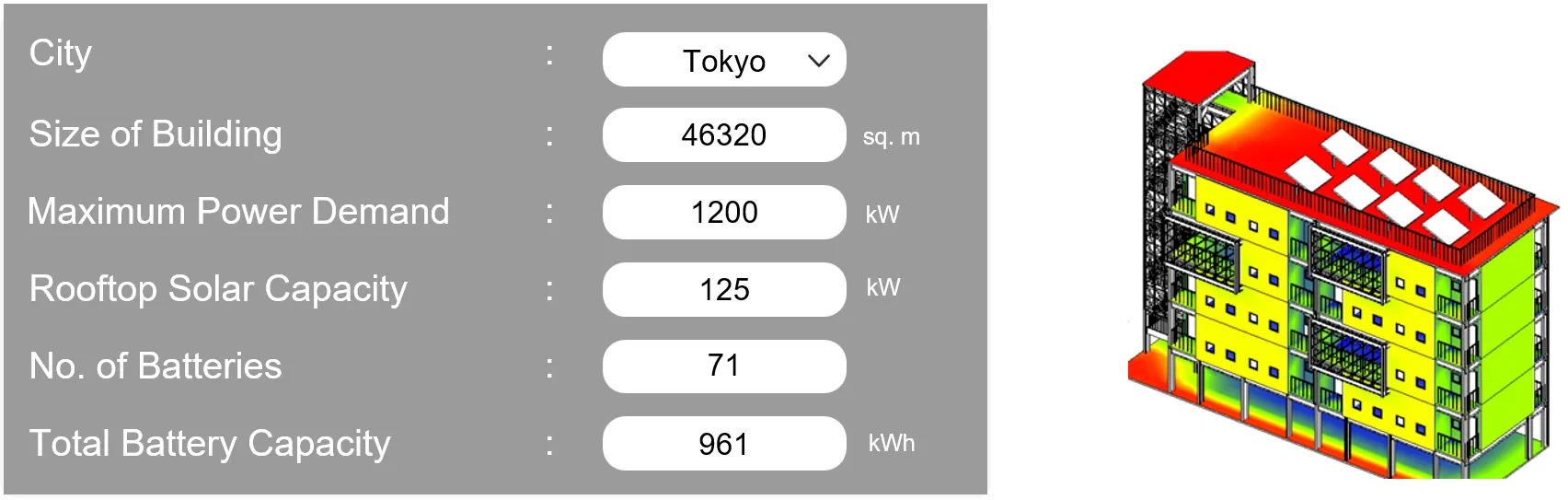
Visual illustrating the AI scheduling and grid interaction
The system optimized the charge and discharge cycles of the BESS efficiently based on power demand forecasts, ensuring excess renewable energy was stored and utilized exactly when it offered the most economic value.
Key Outcomes
1. Dramatic Payback Reduction
The most significant achievement was the reduction of the payback period for the on-site energy systems from ~19.5 years to 8.11 years—a reduction of over 58%.
2. Tangible Financial Savings
The optimized system generates annual energy savings of 4,925,548 Yen (approx. USD 31,913) directly from the utility bill.
3. Sustainability Impact
Beyond cost, the project significantly reduced the facility's carbon footprint by maximizing the utilization of clean solar energy and improving the longevity of the battery system.
Conclusion
This successful deployment in Tokyo demonstrates that hardware investment alone is often insufficient to realize the full value of renewable energy systems. By adding a layer of intelligent optimization with Soul's EnergyMix, facilities can turn underperforming assets into powerful financial and environmental tools, cutting payback times for energy systems (by about 60% for this building, can vary depending on the infrastructure) and securing long-term operational resilience.