Optimizing HVAC Energy Load in a Shopping Mall
A SaverX Implementation Case Study: Achieving Energy Reduction and Thermal Comfort in a 170,000 sq ft Shopping Mall.
Project Snapshot
Introduction
This case study explores the successful implementation of SaverX's ATOM platform for HVAC in a five-floor retail mall comprising 170,000 square feet of climate-controlled space. The facility, operating approximately 18 hours daily with an 800 TR chiller capacity, faced significant challenges related to energy costs and occupant comfort consistency.
As footfall began to increase, the mall operator faced mounting pressure to control energy expenditures while simultaneously improving and maintaining consistent thermal comfort across all floors. The challenge was compounded by the need to respect retailer autonomy over their dedicated Air Handling Units (AHUs), which operated under specific temperature requirements independent of the building's central management system.
Facility Overview
The subject facility represents a typical modern multi-tenant retail environment with complex HVAC requirements. The building's infrastructure presents both challenges and opportunities for energy optimization.
2.1 Building Structure
- Five-story shopping mall configuration
- 170,000 square feet of continuously air-conditioned commercial space
- Over 60 retail outlets distributed across all floors
- Mixed-use spaces including retail, food courts, and common areas
2.2 HVAC Infrastructure
- Centralized System: 800 TR total chiller capacity serving the primary cooling load
- Distribution Network: Centralized cooling with distributed Air Handling Units (AHUs)
- Control Architecture: Hybrid model with both mall-controlled and retailer-controlled units
- Support Equipment: Cooling towers and circulation pumps for heat rejection
2.3 Operational Characteristics
- Operating Schedule: Approximately 18 hours per day to accommodate extended shopping hours
- Load Variability: Significant fluctuation in occupancy patterns between weekdays and weekends
- Diverse Requirements: Multiple thermal comfort zones required for different retail categories
- Tenant Control: Certain retailers maintain autonomous control over their designated HVAC zones
Key Challenges
The mall operator encountered several interrelated challenges that necessitated a comprehensive, intelligent approach to HVAC management. These challenges can be categorized into four primary areas:
3.1 High Energy Costs
With an average monthly electricity expenditure of USD $30,000, HVAC systems represented the dominant contributor to operational energy costs. The facility's extended operating hours and large conditioned space created substantial baseline energy demand, with limited visibility into optimization opportunities. Traditional control strategies proved inadequate for managing the dynamic load conditions characteristic of retail environments.
3.2 Thermal Comfort Inconsistency
Occupants reported varying levels of thermal discomfort across different floors and throughout different periods. This inconsistency stemmed from several factors, including uneven load distribution, varying occupancy densities, solar heat gain differentials, and limitations in the existing control system's ability to respond to localized conditions. Such comfort issues posed a direct threat to customer satisfaction and brand perception.
3.3 Tenant-Specific Climate Requirements
Multiple retailers operating within the facility required their sections to maintain specific temperature and humidity ranges dictated by their merchandise requirements or brand standards. These retailers had been provided with dedicated AHUs, which they controlled independently without coordination with the mall operator's central system. This created a fragmented control landscape that complicated system-wide optimization efforts.
3.4 Balancing increased load with efficiency measures
As customer footfall began increasing post-pandemic, maintaining the delicate balance between time taken to implement energy efficiency measures and service quality became paramount. Any energy-saving measures that compromised thermal comfort or that took time to implement risked damaging the mall's reputation and tenant relationships. The operator needed a solution that could deliver both quick and experiential value simultaneously.
The SaverX Solution
SaverX was selected to address these multifaceted challenges through its intelligent, data-driven approach to HVAC optimisation. Rather than pursuing aggressive setpoint changes or operational restrictions that might compromise comfort, SaverX focuses on optimizing equipment performance and system coordination via the ATOM approach (Adaptive Thermal Optimization and Mapping).
4.1 Strategic Integration Scope
Recognizing that the mall operator controlled the majority of the HVAC infrastructure—specifically the "high side" equipment—SaverX's implementation strategy focused on optimizing these centralized assets. This approach enabled significant energy savings while respecting tenant autonomy over their dedicated areas.
Integration Points
Chillers
Intelligent control algorithms optimize chiller setpoint management based on real-time demand and efficiency curves.
Cooling Towers
Enhanced efficiency management through optimized fan control, water temperature regulation, and seasonal adaptation.
4.2 Sensor Network Deployment
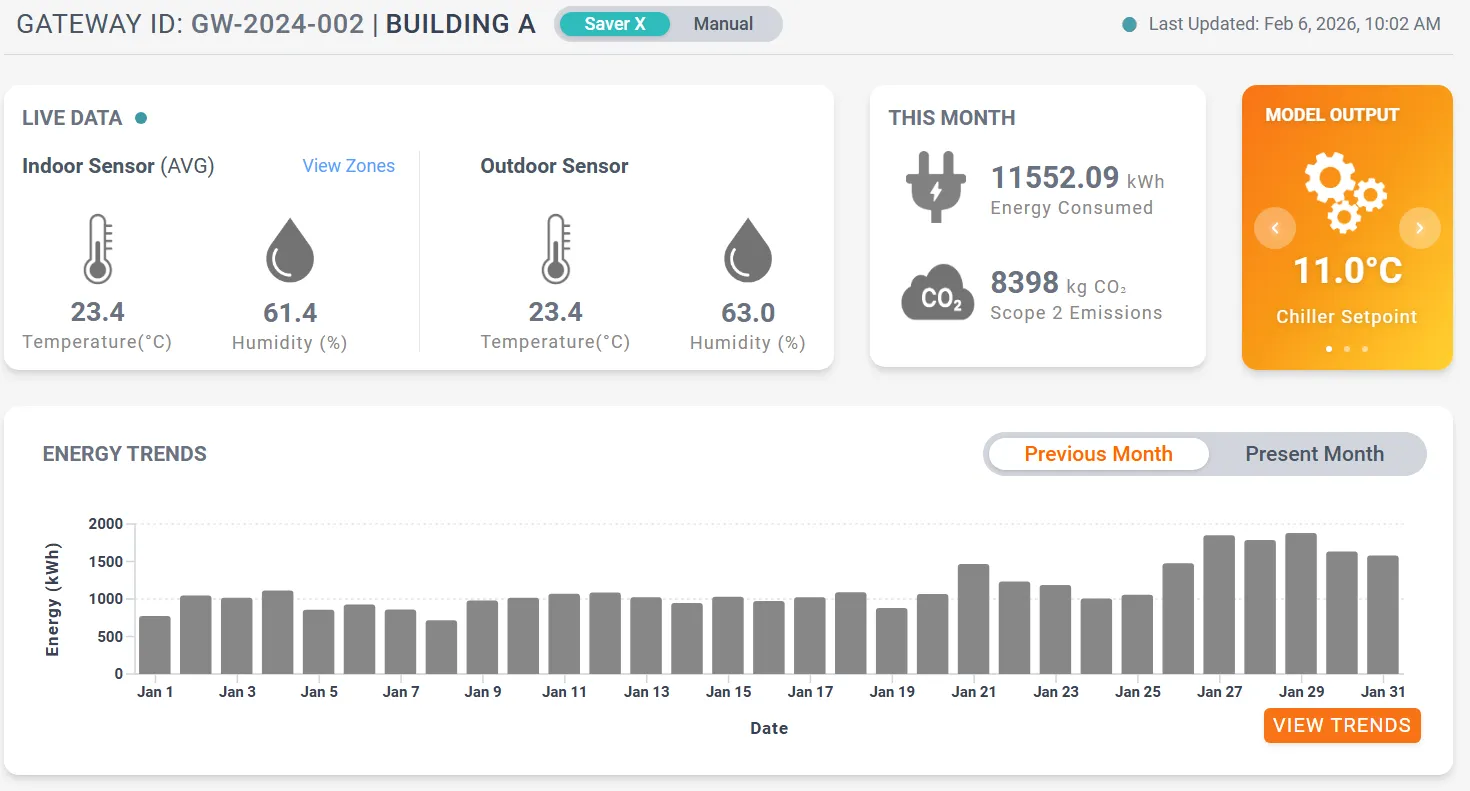
A critical component of the SaverX implementation involved deploying environmental sensors at floor level throughout the facility. Unlike traditional systems that rely solely on return air measurements or limited zone sensors, this granular monitoring approach provides:
- Real-time temperature and humidity data at the occupant level
- Spatial resolution to detect and address comfort variations between zones
- Feedback loops for validating that efficiency measures maintain comfort standards
- Data-driven insights into thermal load characteristics for occupant comfort
4.3 Non-Intrusive Optimization Philosophy
A fundamental principle of the SaverX deployment was maintaining retailer autonomy. The solution was architected to optimize the central plant and distribution systems without interfering with tenant-controlled AHUs. This approach provided several advantages:
- Preserved existing tenant relationships and contractual obligations
- Eliminated the need for complex tenant coordination or approval processes
- Focused optimization efforts on the highest-impact equipment
- Provided improvements that benefit all tenants through better supply conditions
Implementation Approach
The deployment of SaverX followed a phased methodology designed to minimize disruption while establishing the foundation for continuous optimization.
5.1 System Integration
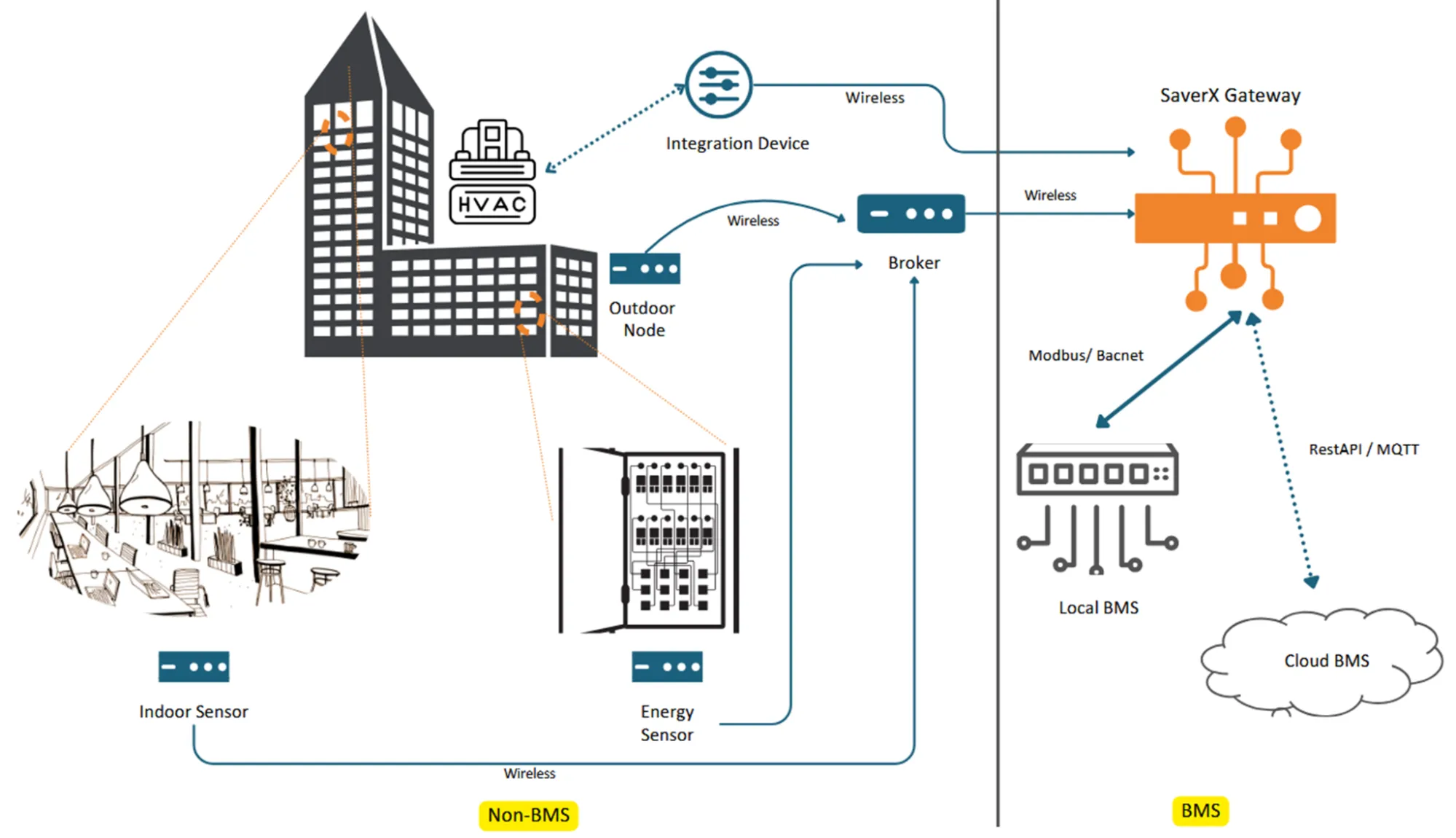
SaverX devices were integrated with the existing Building Management System (BMS) infrastructure, establishing bidirectional communication with chillers, cooling towers, and pumps. This integration enabled real-time monitoring of equipment status, performance metrics, and control parameter adjustment.
5.2 Sensor Installation
Environmental sensors were strategically positioned at floor level across all five floors, focusing on high-occupancy areas, zones with historical comfort complaints, and representative sampling points for different space types. The wireless sensor network provided immediate visibility into comfort conditions with minimal installation complexity.
5.3 Baseline Establishment and Learning
Following integration, SaverX entered a learning phase during which it collected comprehensive data on:
- Equipment performance characteristics and efficiency curves
- Thermal response of different zones to system adjustments
- Occupancy patterns and corresponding load profiles
- Correlation between outdoor conditions and internal loads
- Existing comfort levels and acceptable variation ranges
The above information is used to arrive at a dynamic baseline that captures weather conditions and occupancy, as per ASHRAE and IPMVP guidelines.
5.4 Optimization Activation
With sufficient baseline data, SaverX's optimization algorithms were progressively activated. The platform continuously analyzes system performance and implements real-time adjustments to equipment operation, balancing energy efficiency with occupant comfort requirements.
Conclusion
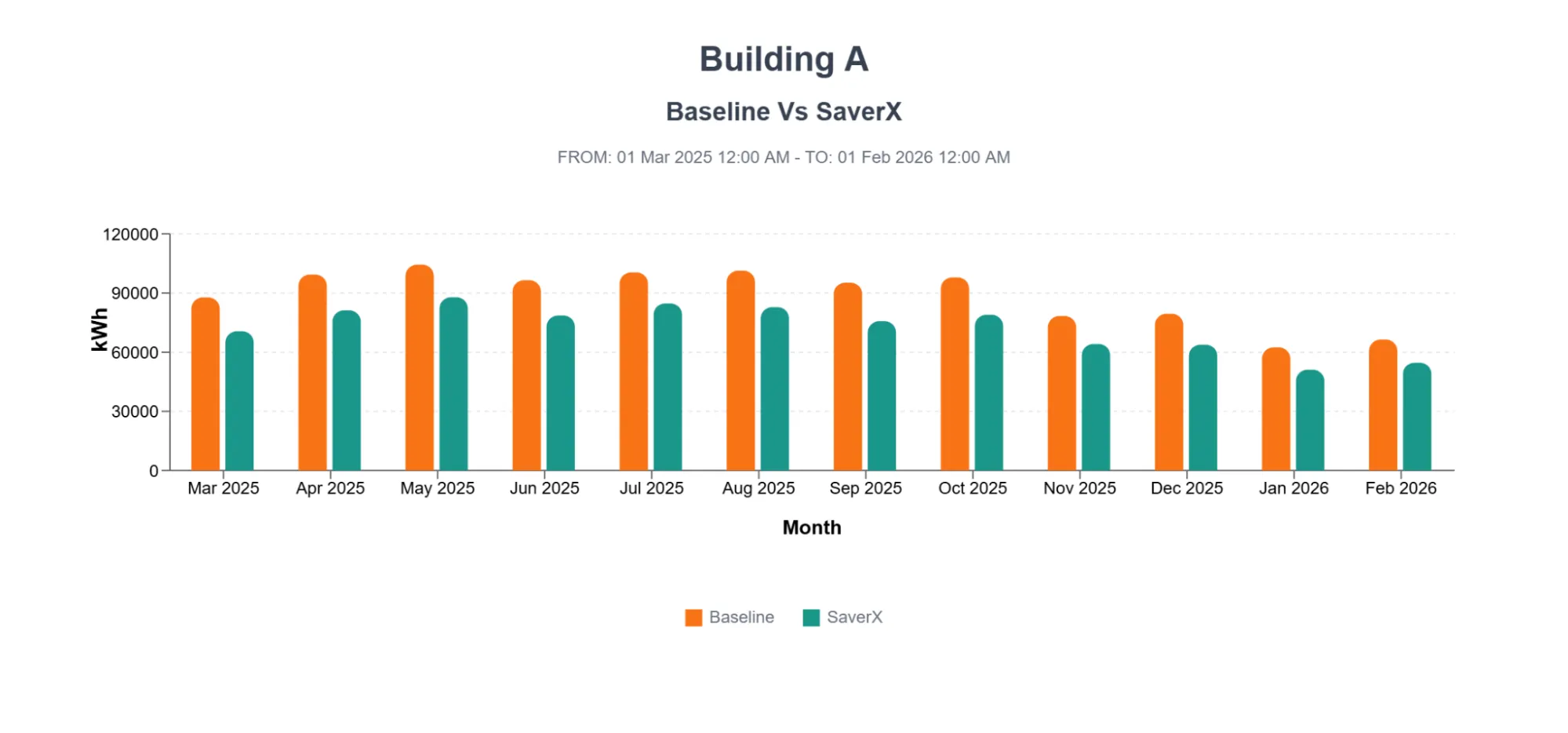
The implementation of SaverX at this 170,000 square foot retail facility demonstrates the viability of intelligent HVAC optimization in complex, multi-tenant environments. By focusing optimization efforts on centralized equipment while respecting tenant autonomy, SaverX enabled the mall operator to address energy cost concerns without compromising thermal comfort or tenant relationships, resulting in an energy reduction of 25% on the HVAC systems and avoided annual maintenance costs of USD 4000, while ensuring the thermal comfort as per ASHRAE (Standard 55/ TC9.9)
The solution's emphasis on granular comfort monitoring, non-intrusive optimization, and continuous learning positions it as a sustainable approach to building management in the retail sector. As energy costs continue to rise and occupant expectations for comfort increase, platforms like SaverX provide a pathway for building operators to achieve both economic and experiential objectives.